
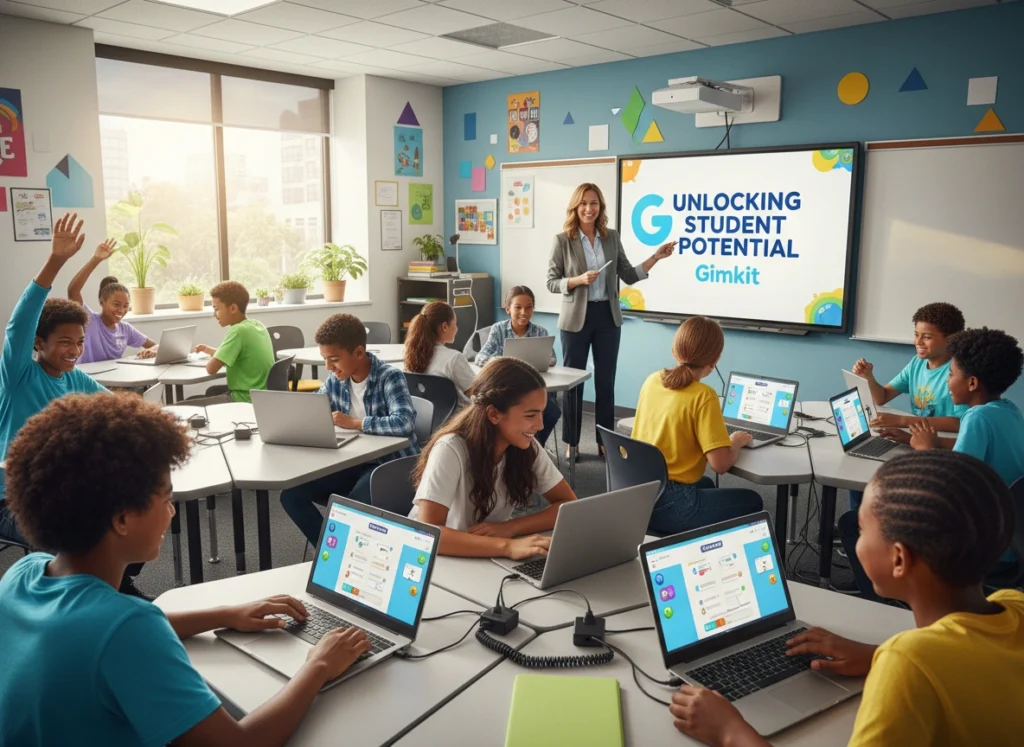

In the modern classroom, maintaining high levels of student engagement is both a primary goal and a significant challenge. Educators are continually searching for innovative tools that not only deliver curriculum but also inspire active participation. Gimkit has emerged as a powerful and dynamic platform that transforms learning into an exciting, game-based experience. By blending educational content with engaging mechanics, teachers can effectively boost student participation, deepen understanding, and create a more vibrant learning environment.
This article explores how educators can leverage Gimkit to its full potential. We will examine its unique benefits, offer practical strategies for implementation, and provide concrete examples of how this tool can revitalize classroom dynamics and foster a genuine enthusiasm for learning.
The Unique Advantages of Gimkit in the Classroom
While many game-based learning platforms exist, Gimkit offers a distinct set of features that make it particularly effective for increasing student involvement. Understanding these benefits is the first step toward successful integration.
1. Student-Paced Learning within a Competitive Framework:
Unlike many quiz-style games where the entire class moves at the same pace, Gimkit allows students to progress through questions individually. This self-paced nature reduces the anxiety that some students feel when they need more time to think. They can answer questions at their own speed without feeling rushed or left behind. At the same time, the live game format, complete with leaderboards and in-game currency, introduces a healthy dose of competition that motivates students to answer correctly and quickly. This balance caters to different learning speeds while keeping everyone engaged.
2. Motivation Through In-Game Economics:
Gimkit’s core mechanic revolves around earning virtual money for correct answers. Students can then use this money to purchase power-ups and upgrades, adding a strategic layer to the game. This simple economic system is a powerful motivator. It shifts the focus from merely getting the right answer to developing a strategy for success. Students become invested in their progress, making decisions about whether to save their earnings for a major upgrade or spend them on smaller, immediate advantages. This process encourages critical thinking and planning, skills that extend far beyond the game itself.
3. Repetition without Redundancy:
Mastery often requires repetition, but drills can quickly become monotonous. Gimkit cleverly addresses this by cycling through questions that a student answers incorrectly. Instead of simply being told the right answer, the student will encounter the question again later in the game. This spaced repetition is a proven method for reinforcing information and aiding long-term memory retention. Because it happens within an engaging game, students rarely feel like they are doing repetitive drills. They are simply getting another chance to earn more in-game currency.
4. Versatility Across Subjects and Grade Levels:
Gimkit is not limited to a specific subject or age group. Its flexibility allows teachers to create custom “Kits” (question sets) for any topic, from elementary school vocabulary to complex high school physics concepts. Teachers can add questions, import existing sets from platforms like Quizlet, or browse a vast library of user-created Kits. This adaptability makes Gimkit a valuable tool for review sessions, formative assessments, and even introducing new topics across the entire curriculum.
Practical Strategies for Effective Gimkit Implementation
Simply launching a game is not enough to guarantee meaningful participation. To truly harness Gimkit’s power, teachers should be intentional about how they integrate it into their lesson plans.
Create High-Quality Question Kits:
The foundation of any successful Gimkit session is a well-designed question set.
- Align with Learning Objectives: Ensure every question directly relates to the specific concepts you want students to master.
- Vary Question Formats: While multiple-choice is standard, consider using true/false or short-answer formats where appropriate. Write clear, unambiguous questions and plausible distractors for multiple-choice options.
- Add Explanations: Gimkit allows you to add explanations that appear after a student answers a question. Use this feature to provide immediate feedback and clarify common misconceptions. This turns a simple game into a powerful, self-correcting learning tool.
Choose the Right Game Mode:
Gimkit offers several game modes, each suited for different educational goals.
- Classic Mode: The standard competitive mode is excellent for high-energy review sessions where individual performance is the focus.
- Team Mode: This collaborative mode groups students into teams, encouraging them to work together toward a common goal. It’s perfect for fostering communication and teamwork, as students can pool their earnings and strategize collectively.
- Trust No One: This mode introduces a social deduction element similar to games like “Among Us.” It is fantastic for building critical thinking and inference skills, as students must identify “impostors” while still answering content-related questions.
- The Floor is Lava: In this mode, teams must answer questions to build their way to safety before the lava rises. It adds a sense of urgency and promotes quick, collaborative thinking.
Set Clear Expectations and Goals:
Before starting a game, explain the purpose of the activity. Is it a fun review before a test? A low-stakes pre-assessment to gauge prior knowledge? When students understand the “why,” they are more likely to engage meaningfully. You can also set a class-wide goal, such as reaching a collective earnings target in Team Mode. This unites the class and makes the experience feel more collaborative.
Use Gimkit for Formative Assessment:
After a game concludes, Gimkit provides a detailed report on student performance. This data is invaluable for formative assessment. You can quickly see which questions were most frequently missed by the class and which students struggled with particular concepts. Use this information to guide your instruction. You might decide to re-teach a difficult topic, pull a small group for targeted support, or create a follow-up activity that addresses common errors. This transforms a fun game into a diagnostic tool that informs your teaching practice.
Enhancing Engagement: Real-World Classroom Examples
The true impact of Gimkit is best seen through its application in the classroom. Here are a few examples of how it can drive participation.
Example 1: Vocabulary Review in an English Language Arts Class
A middle school ELA teacher wants to review 20 key vocabulary words before a quiz. Instead of using flashcards, she creates a Gimkit. The questions ask students to identify definitions, find synonyms, or use the word correctly in a sentence. She chooses Team Mode, dividing the class into four groups. The energy in the room is high as students discuss answers and decide together which power-ups to buy. The competitive spirit drives them to master the words, and the post-game report shows the teacher that three specific words were consistently missed, allowing her to quickly review them before the quiz.
Example 2: Historical Figure Review in a Social Studies Class
A high school history teacher is preparing for a unit exam on the American Revolution. He creates a Gimkit using the “Trust No One” mode. The questions focus on key figures, events, and dates. As students answer questions, they also have to deduce who the “impostors” are in the game. This requires them not only to know the material but also to use logic and pay attention to the actions of their peers. The game fosters intense focus and critical thinking, turning a standard review session into a thrilling investigation.
Example 3: Introducing a New Math Concept
A fourth-grade teacher is introducing the concept of equivalent fractions. To gauge her students’ prior knowledge and build initial engagement, she uses Gimkit with a very simple question set. The game is short and low-stakes. Afterward, she uses the report to identify students who already have a grasp of the concept and those who are completely new to it. This allows her to form differentiated groups for the main lesson, ensuring that every student receives the appropriate level of support. The game served as an effective and fun “hook” that got students excited about the topic from the very beginning.
Conclusion
Gimkit is more than just another classroom game; it is a sophisticated instructional tool that, when used thoughtfully, can significantly increase student participation. Its unique blend of self-paced learning, strategic gameplay, and built-in repetition engages students on a deeper level. By creating quality content, choosing appropriate game modes, and using the data to inform instruction, teachers can transform review sessions and assessments from passive obligations into active, exciting learning experiences. In a world where capturing students’ attention is paramount, Gimkit provides an effective and enjoyable way to help them learn, participate, and ultimately succeed.
Please click here for more info.