

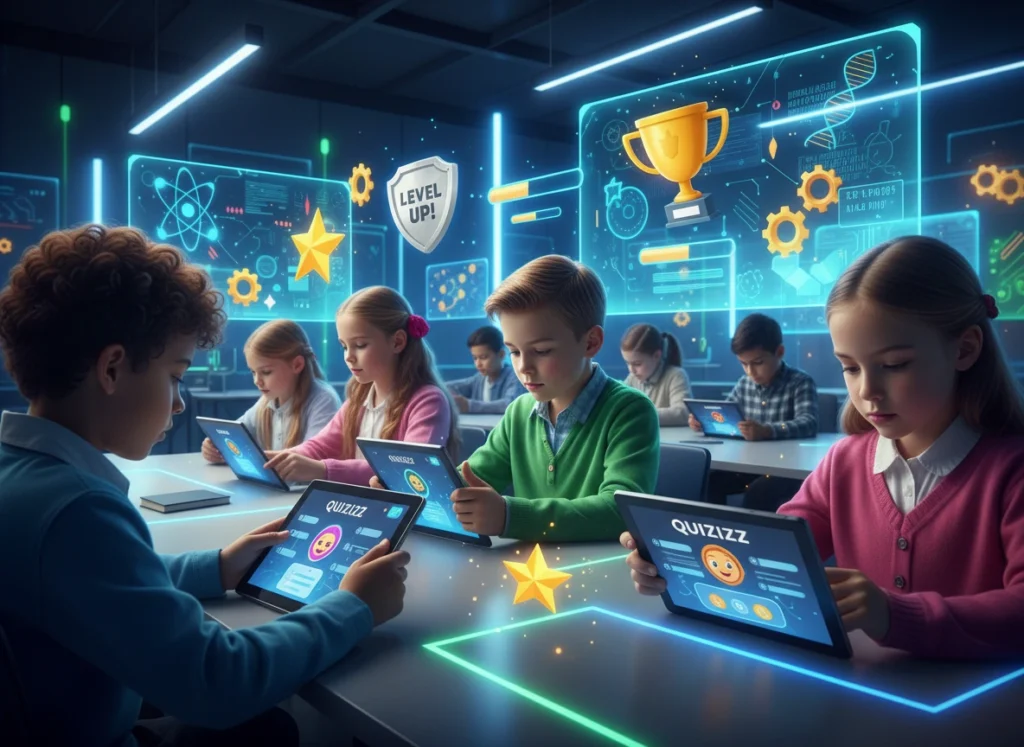

Learning is not always a linear path. Traditional methods of instruction often struggle to hold attention, leading to disengagement and reduced knowledge retention. Educational technology has sought to solve this challenge for decades, and one of the most effective solutions to emerge is gamified learning. By integrating game mechanics into educational content, platforms can transform passive learning into an active, engaging experience.
This article explores the science behind why gamified learning is so effective. We will examine the psychological principles that drive motivation and engagement. We will also analyze how the popular platform Quizizz expertly implements these principles through its features, creating a powerful tool for educators and learners alike.
The Psychology of Gamified Learning
Gamified learning is more than just adding points and badges to a lesson. It is a strategic application of game-design elements to non-game contexts. The goal is to tap into fundamental human psychology to increase participation, motivation, and ultimately, comprehension. Several core scientific principles explain its success.
Intrinsic vs. Extrinsic Motivation
Motivation is the driving force behind any action, including learning. It can be categorized into two types: intrinsic and extrinsic.
- Extrinsic motivation comes from external rewards. Think of grades, praise from a teacher, or avoiding punishment. While effective, it can be temporary. Once the external reward is removed, the motivation often disappears.
- Intrinsic motivation comes from within. It is the desire to do something because it is inherently interesting, enjoyable, or fulfilling. This type of motivation leads to deeper, more sustained engagement.
Gamified learning masterfully blends both. Points and leaderboards serve as extrinsic motivators, providing immediate, tangible feedback. However, the true power of gamification lies in its ability to foster intrinsic motivation. It creates a sense of autonomy
Please click here for more info