

Minecraft stands as a defining pillar of modern multiplayer gaming. Millions of players navigate its endless blocky landscapes every single day. While the base game offers an expansive sandbox, the true magic often happens within multiplayer servers. These player-hosted spaces transform isolated survival experiences into bustling, interconnected societies. However, connecting millions of unique players to thousands of distinct servers requires a bridge. Minecraft server lists serve as this vital infrastructure, acting as the primary catalysts for building, growing, and sustaining gaming communities.
The Connective Tissue of Multiplayer Gaming
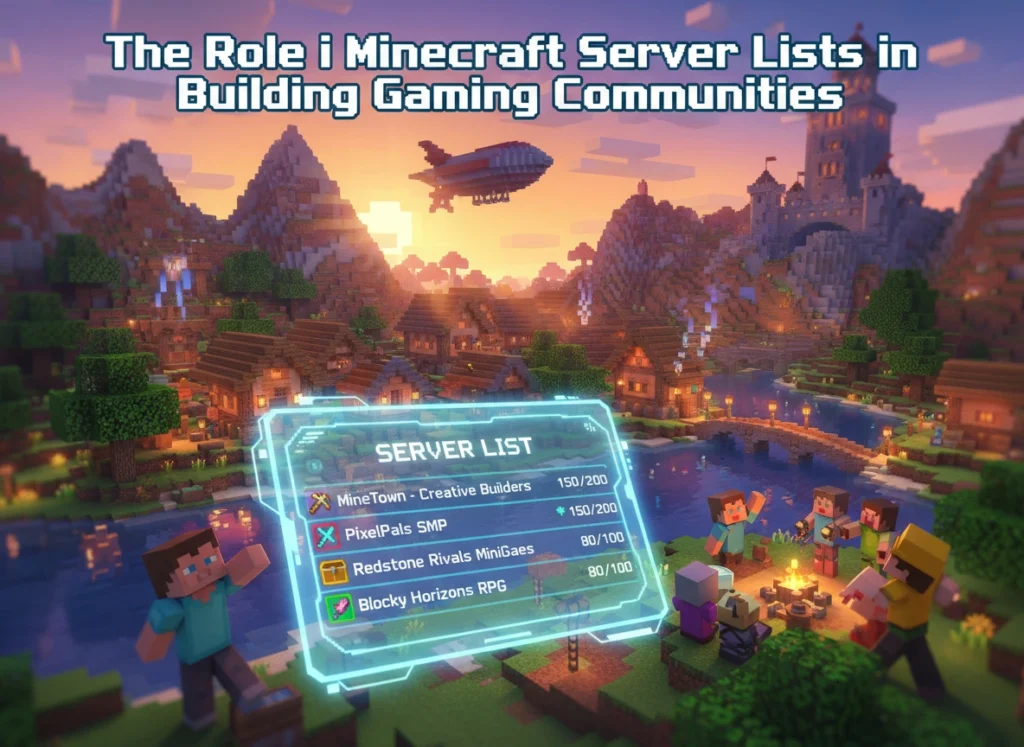
Finding the right group to play with dictates the entire multiplayer experience. Minecraft server lists function as comprehensive directories that organize an otherwise chaotic landscape. Without these platforms, players would have to rely on word-of-mouth or scattered forum posts to find a new home. Server lists streamline this process by categorizing servers based on specific tags, game modes, and player counts.
This organized approach directly facilitates community building. When a player searches for a specific tag, such as “Vanilla Survival” or “City Roleplay,” the server list presents highly relevant options. This ensures that the people joining a server already share a baseline interest in the core gameplay loop. By filtering players based on their specific preferences, server lists guarantee that new arrivals are highly compatible with the existing player base. This shared interest forms the foundation of strong, cohesive gaming communities where players naturally collaborate and bond over mutual goals.
Boosting Server Visibility and Driving Growth
Launching a new Minecraft server takes immense technical effort and creative planning. Yet, without a dedicated player base, even the most beautifully crafted spawn town remains empty. Server lists provide the essential visibility that new and growing servers desperately need to survive. They level the playing field, giving independent creators a chance to showcase their hard work to a massive audience of active players.
These platforms typically utilize ranking systems driven by player engagement. Servers move up the lists based on uptime, player counts, and daily votes from their community. This voting mechanic creates a fascinating symbiotic relationship between the server administration and the player base. To climb the ranks and attract new members, server owners must cultivate a loyal community willing to cast daily votes. In return, players actively participate in the growth of their chosen server. The shared goal of reaching the front page of a prominent server list rallies the community together, fostering a deep sense of shared ownership and pride in the server’s success.
Fostering Niche Communities and Diverse Gameplay
Minecraft allows for infinite possibilities, and the community has pushed the game engine to its absolute limits. Developers have created entirely new genres within the game, from intense competitive PvP tournaments to relaxing, economy-driven farming simulators. Server lists play a crucial role in validating and sustaining these diverse gameplay styles by connecting niche servers with their specific target audiences.
Consider game modes like “Skyblock” or “Factions.” These originated as small community concepts but exploded into massive sub-genres because server lists made them easily discoverable. If a group of developers creates a highly specialized server—perhaps a one-to-one recreation of a fictional universe complete with custom mechanics—they face a highly restricted target audience. A server list categorizes this project so that fans of that specific universe can find it immediately. By supporting niche tags and complex search filters, these directories ensure that diverse, experimental gameplay styles can thrive. They protect the Minecraft ecosystem from becoming a monolith, encouraging constant innovation and creativity among server developers.
The Mechanics of Engagement and Retention
Building a community is only the first step; maintaining it requires consistent engagement. Server lists contribute heavily to player retention strategies. Many lists integrate seamlessly with server-side plugins to reward players for their participation. When a player navigates to a server list to cast a vote, they often receive in-game currency, cosmetic items, or helpful resources.
This daily interaction establishes a healthy routine. Players log in, vote to support the community, receive their rewards, and interact with their peers. This cycle reinforces player habits and keeps the server active. Furthermore, high placement on a server list acts as a badge of honor and a sign of stability. When prospective players see a server maintaining a top spot for months at a time, they view it as a reliable, long-term investment for their time. This perceived stability is crucial for building massive, long-lasting communities where players feel comfortable dedicating hundreds of hours to massive building projects or complex economic systems.
Shaping the Minecraft Ecosystem Over the Years
Looking back at the history of the game, server lists have fundamentally shaped the trajectory of the community. In the early days, multiplayer connections were fragmented. Players shared IP addresses through instant messengers or obscure web forums. The introduction of dedicated server lists centralized the community, turning multiplayer Minecraft from a niche hobby into a highly accessible global phenomenon.
These platforms facilitated the rise of massive server networks. Titans of the multiplayer space, such as Hypixel or Mineplex, utilized server lists heavily in their formative years to gather their initial player bases. At the same time, these directories have preserved the grassroots nature of the game. They provide equal space for a massive network hosting fifty thousand concurrent players and a small, whitelisted survival server looking for ten dedicated builders.
Server lists have also driven the professionalization of server management. Because lists rank servers based on uptime and player satisfaction, administrators are highly motivated to provide reliable, lag-free experiences. The competition generated by these public leaderboards forces server owners to constantly improve their hardware, refine their custom plugins, and moderate their communities effectively. The overall quality of multiplayer Minecraft has improved drastically because server lists create a competitive environment that rewards excellence and stability.
The Social Dynamics of Server Discovery
The social impact of how players discover servers cannot be understated. When players browse a server list, they read descriptions, examine custom banners, and look at community reviews. This browsing experience sets the tone before the player even connects to the server IP. A well-crafted server listing communicates the rules, the culture, and the expectations of the community.
Clear communication on a server list minimizes friction. If a server is dedicated to hardcore, grief-enabled survival, stating this clearly on the list ensures that only players looking for that intense experience will join. This prevents misunderstandings and reduces toxicity, as players are not surprised by the server’s rule set. By acting as the front door to the community, server lists help establish the cultural boundaries and social norms of the group right from the start.
Conclusion
Minecraft server lists represent much more than simple directories of IP addresses. They are the foundational infrastructure that enables gaming communities to form, grow, and thrive. By seamlessly connecting players with shared interests, providing crucial visibility to independent creators, and sustaining incredibly diverse gameplay styles, these platforms have shaped the multiplayer landscape for over a decade. They turn an isolating sandbox into a globally connected universe. As long as players continue to seek out new adventures and shared experiences within the game, server lists will remain an indispensable tool for building the vibrant, collaborative communities that make Minecraft truly special.